Nowadays, with technology and work requiring a lot of sitting, many people find themselves in the seated position for hours. Though sitting is usually not considered an unhealthy habit, too much time spent sitting in the same position may have negative effects on muscles, joints, and general well-being. At Airport Physio & Rehab, we often treat patients experiencing various problems caused by excessive amounts of sitting.
The Hidden Impact of Sitting for Long Hours
The body is naturally built for movement. Without it for extended periods of time, the muscles start tightening up, joints get stiff, and posture starts becoming compromised. This can lead to discomfort and decreased mobility in the long run.
Increase in Neck and Shoulder Tension
One of the most prevalent consequences of staying in a seated position for an extended period of time is neck and shoulder tension. Many individuals unconsciously assume a forward head posture while using their computers or smartphones. The forward head posture adds more strain on the neck and shoulder muscles. It causes the person to feel stiff neck and sore shoulders. Additionally, he/she may suffer from headaches and a lack of neck mobility.
Lower Back Pain and Spinal Stress
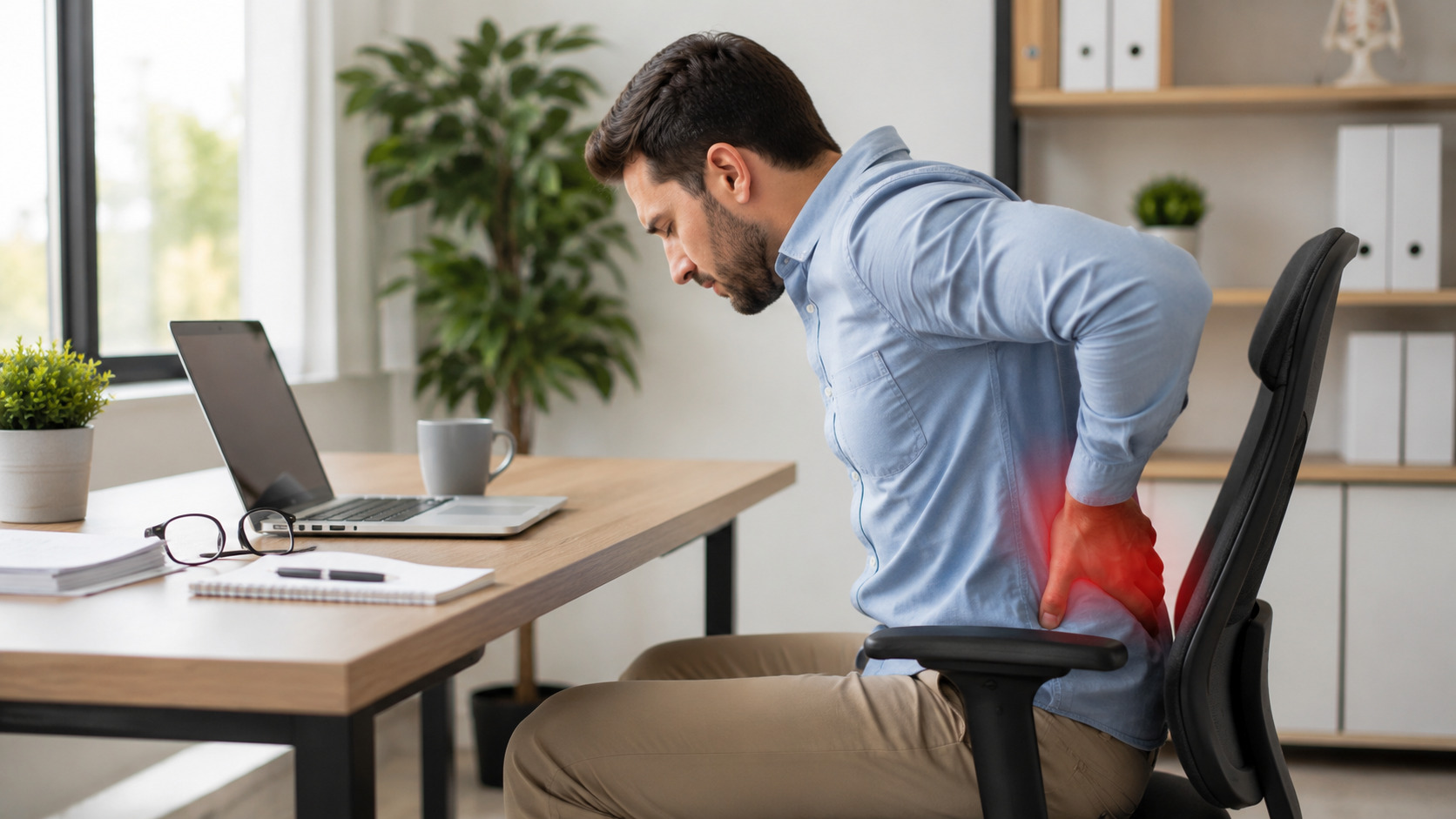
Sitting for long periods places significant pressure on the lower back, especially when posture is poor. The muscles supporting the spine can become tired , causing increased stress on the spinal discs and surrounding structures. This often leads to lower back pain, muscle tightness, and discomfort when standing after sitting for an extended time. Without regular movement and proper support, these symptoms can gradually worsen and become more difficult to manage.
Tight Hip Flexors and Limited Movement
The hip flexor muscles will be contracted when sitting for a lengthy period of time. This condition may make it difficult to move freely because of the restriction caused by tight muscles. Posture problems, lower back pain, and difficulty in performing exercises and activities like walking and going up the stairs may result from this issue. People may not know that hip tightness may be related to the duration of time spent sitting.
Weak Glute Muscles
The glute muscles are responsible for holding up the pelvis, hips, and the lower back area. But when you spend too much time in a seated position, your glutes don’t move very much and therefore become weak. This weakness can have negative effects on the way that you walk and stand. It can even lead to injury and pain in your knees and lower back.
Reduced Blood Circulation
There’s another common effect that occurs when one sits for long stretches of time; this effect is poor circulation, especially in one’s feet and legs. Poor blood circulation due to immobility causes swelling, weakness, and soreness. It’s recommended that one remains active throughout the day to have good circulation.
Warning Signs You Can’t Ignore
Your body will send you signals when your health starts to deteriorate due to spending too much time sitting down. Neck pain, backaches, shoulder stiffness, regular headaches, tight hips, bad posture, numbness, tingling, and lack of flexibility could all be signs that your body is having a hard time adjusting to all the sitting you are doing.
Simple Solutions Against Negative Consequences of Prolonged Sitting
There are many ways of reducing negative consequences from prolonged sitting and increasing one’s ability to move freely.
Taking Movements Breaks
An easy way to keep your body healthy is making brief movement breaks in your daily routine. Just standing up and stretching for a couple of minutes every 30 to 60 minutes can be highly beneficial.
Improving Your Workplace
A well-designed office space can make a huge difference to posture and general body wellness. Raising the computer monitor to eye level, having appropriate back support, ensuring the feet are firmly on the ground, and positioning your arms comfortably is important for reducing muscle strain during the workday.
Keep Active and Stretch Regularly
Exercise regularly to help keep your muscles and joints healthy. Stretching the areas that tend to tighten when you sit down, such as your hips, hamstring muscles, chest, neck, and shoulders, will also be beneficial. Exercise activities that will assist include walking, swimming, cycling, and weight lifting.
How Physiotherapy Can Help
If prolonged sitting has already started affecting your daily life, physiotherapy can provide effective and personalized treatment. A physiotherapist can assess your posture, identify movement limitations, and develop a customized plan to address the root cause of your discomfort. Treatment may include targeted exercises, manual therapy, posture correction strategies, and mobility training to help reduce pain and restore function.
Take Control of Your Health Today
Although it’s often difficult to avoid sitting in today’s world, the consequences do not necessarily have to follow forever. With some changes in your everyday activities and appropriate assistance from professionals, you can achieve improvements in your posture, eliminate the risk of various pains, and ensure your general well-being. In case you are suffering from pain in the neck or back, as well as problems with mobility and stiffness, we’re glad to offer you our services at Airport Physio & Rehab.